What Face Shape Do I Have? 4 Ways to Find Your Face Shape
A practical guide to finding your face shape from a mirror, simple measurements, or a clear photo—then using the result without treating one label as a verdict.
Written by
FaceAnalysis.org Editorial Team
AI face analysis and visual measurement editors
We explain photo-based face analysis in plain language, with practical checks for measurement limits, privacy, and responsible interpretation.
Editorial review
Reviewed for search intent, measurement clarity, and consistency with the FaceAnalysis.org face shape detector.
Face shape is a styling and visual-description category, not a medical diagnosis or a fixed measure of attractiveness.
How this guide was prepared
The guide combines the four measurements commonly used in face-shape explanations with photo-quality checks and an AI-assisted workflow. The goal is a repeatable starting point, not a promise that one photo can define every face perfectly.
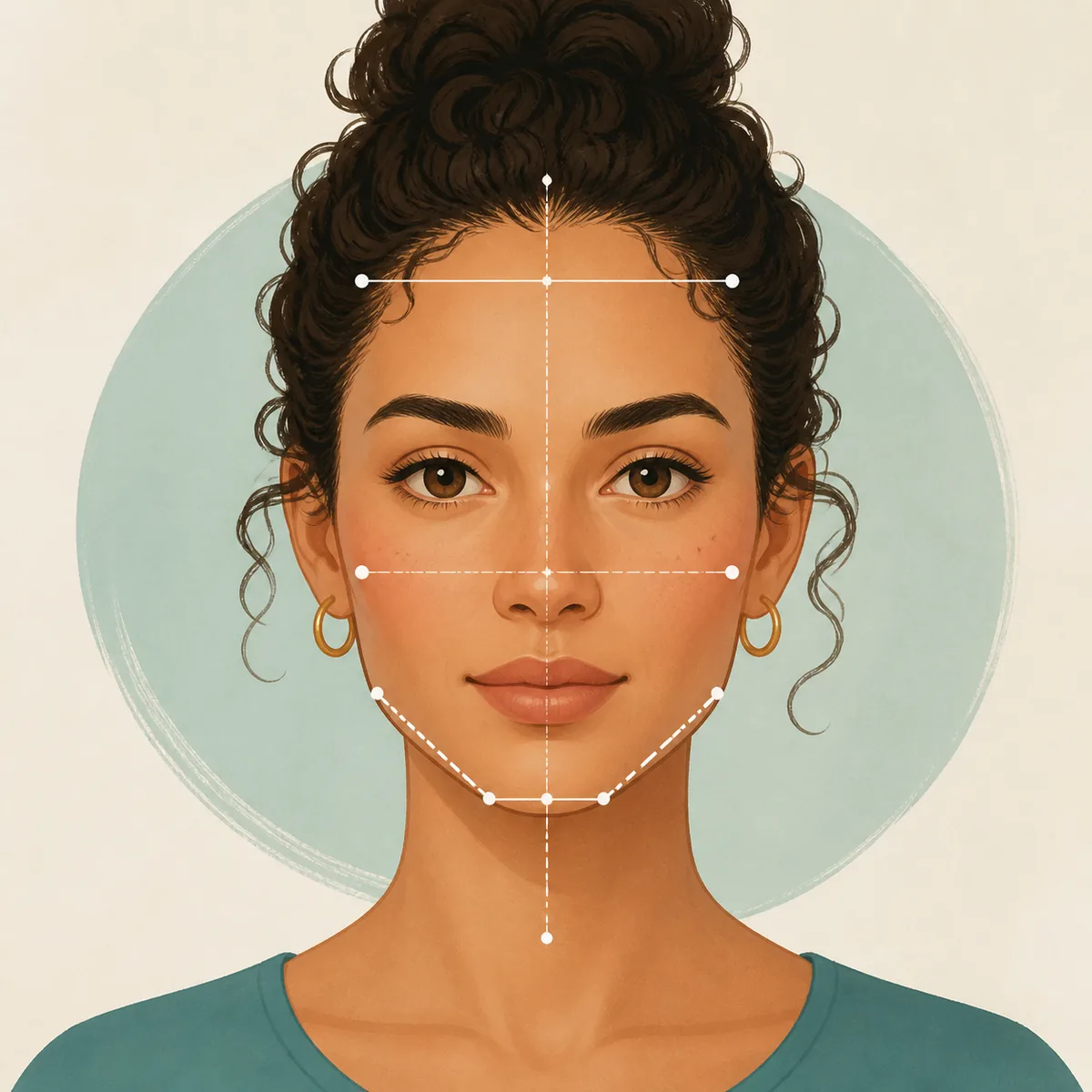
If you are asking, “what face shape do I have?”, the short answer is to compare four things: your overall face length, forehead width, cheekbone width, and jawline. You can do that with a mirror, a photo, or an AI face shape tool. The most useful result is a pattern across those signals—not a single ratio or a perfect label.
For a quick answer, use a straight-on photo with your hair pulled away from your face and try the FaceAnalysis.org face shape detector. For a slower self-check, measure the same four landmarks and compare how your face is widest, how long it is, and whether the jaw looks rounded, tapered, or angular.
This guide explains how to find your face shape, why two photos can produce different impressions, and how to use the result for glasses, hair, makeup, or beard ideas without turning a flexible styling category into a judgment about your appearance.
What Does “What Face Shape Do I Have?” Really Ask?
Face shape describes the broad outline created by the relationship between facial length and facial width. It is different from eye shape, individual feature analysis, facial symmetry, or a beauty score. Someone can have an oval outline and still have distinctive eyes, a strong jaw, or proportions that do not match a generic example.
The common labels—oval, round, square, heart, diamond, and oblong—are useful because they make visual comparisons easier. They are not universal medical categories, and different guides may use slightly different names. A face can also sit between two labels, such as oval and oblong or heart and diamond.
When people search for what face shape they have, they usually want one of three things: a fast visual answer, a manual method they can repeat, or styling ideas that feel more specific than general advice. A good guide should answer all three without pretending that a label is permanent.
The useful rule
Look for the strongest pattern across width, length, and jaw shape. If two categories remain plausible, keep both as working possibilities and test which styling suggestions actually help you.
Measure Four Face-Shape Signals
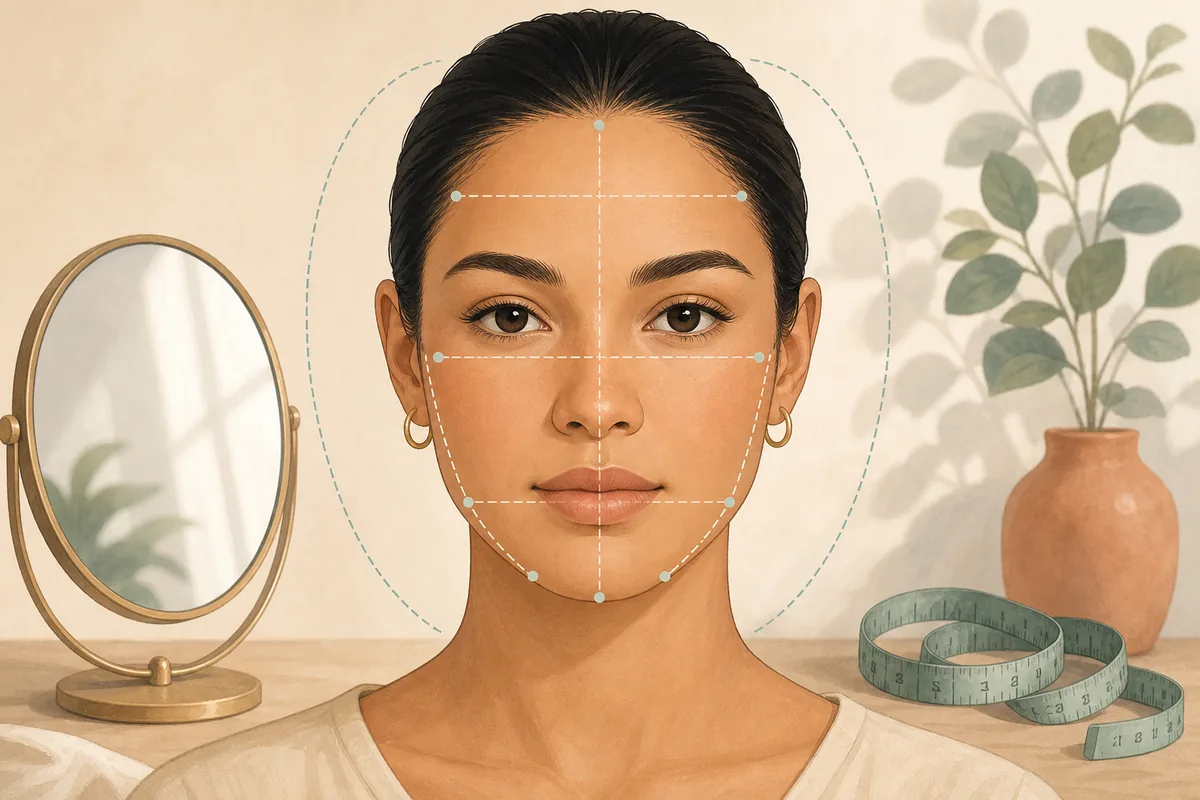
If you want a manual answer to “what is my face shape?”, take a front-facing photo or stand in front of a mirror with your hair away from your temples and jaw. Use a soft tape measure for your face, or place a ruler against a printed photo. The exact numbers matter less than using the same method for every measurement.
Do not pull the tape tightly across the skin, tilt your head, or measure one feature from a close wide-angle selfie. Those small changes can make the forehead, cheekbones, or jaw look wider than they are. Record the four values, then compare their relationships.
| Signal | How to check it | What it helps distinguish |
|---|---|---|
| Face length | From the hairline to the tip of the chin | Whether the face reads short, balanced, or noticeably long |
| Forehead width | Across the widest part of the forehead | A broader upper face or a narrower upper face |
| Cheekbone width | Across the most prominent points of the cheeks | Where the face reaches its visual maximum width |
| Jaw width and shape | Compare the jaw angle, chin taper, and lower-face width | Whether the outline feels square, soft, rounded, or pointed |
- Measure from the same front-facing view instead of mixing a mirror measurement with a side-angle photo.
- Keep hair, glasses, and strong shadows away from the outline you are trying to inspect.
- Treat the jaw as both a width and a contour: a broad jaw can be angular, rounded, or softly tapered.
- If the numbers look close, rely on the overall outline and repeat the check with a second neutral photo.
How to Find Your Face Shape in Four Steps
A repeatable workflow is more useful than staring at one selfie and trying to recognize a celebrity comparison. Start with a neutral image, collect the same observations, and only then compare your face with category descriptions.
You can use this process with a mirror or as a preparation step before using an online face shape detector. The manual check also helps you understand why an AI result may favor one shape over another.
1. Set up a neutral view
Face the camera directly, keep your head upright, pull hair away from the sides of your face, and use soft light. Avoid filters, strong smiles, and very close selfies.
2. Compare length with width
Ask whether your face is clearly longer than it is wide, close to balanced, or visibly short and full. This first impression narrows the useful categories.
3. Find the widest area
Compare your forehead, cheekbones, and jaw. Notice whether the middle of the face is widest, whether the upper face is wider, or whether the width stays fairly even.
4. Read the jaw and chin
Look for a soft curve, a strong angle, a narrow point, or a gradual taper. Combine this contour with the width pattern instead of using it alone.
How to Read the Common Face Shapes
The descriptions below are comparison cues, not strict tests. Many real faces combine features from more than one category, and the same face can look different with hair framing, expression, camera distance, or lighting.
If you are unsure, choose the two closest descriptions and use the result as a styling shortlist. It is usually more helpful to ask which frames or hair shapes balance your features than to ask which label is objectively best.
Oval
The face is usually longer than it is wide, with a gently rounded hairline and jaw. The cheekbones may be the widest area, while the chin tapers without looking sharply pointed.
Round
The face length and width are often closer, with soft cheeks and a rounded jaw. The outline can look fuller even when the forehead and cheekbones are not exactly the same width.
Square
The forehead, cheekbones, and jaw can look similarly broad, and the jaw often has a clearer angle. A square outline is about structure, not whether the face is masculine or feminine.
Heart
The upper face is often wider than the lower face, with a narrower or more pointed chin. The hairline and forehead may carry more visual weight than the jaw.
Diamond
The cheekbones are often the widest point, while the forehead and jaw appear narrower. A diamond outline can be easy to confuse with heart or oval when the photo angle changes.
Oblong
The face reads noticeably longer than it is wide, with width that stays fairly even from the forehead through the jaw. Some guides call this rectangular or long rather than oblong.
Why Your Face Shape Result Can Change
If you get an oval result in one photo and an oblong or heart result in another, that does not automatically mean the tool is broken. A face-shape estimate depends on the visible contour, and a camera can change that contour before any analysis begins.
A close front camera can enlarge the nose and central face while making the sides appear farther away. A tilted head changes the apparent length. Hair can hide the jaw, glasses can cover the cheek area, and a smile can lift or widen parts of the outline.
The best response is to improve the input and look for a stable pattern across two or three neutral images. A result that changes slightly at the boundary between two categories is normal; a result that changes dramatically usually deserves a better photo before a stronger conclusion.
Use the result as an estimate
Face shape is a visual styling category. It is not a diagnosis, a personality reading, or a scientific ranking of attractiveness. Keep the conclusion proportional to the quality of the photo and the purpose of the check.
Common sources of variation
- Wide-angle or very close phone cameras can exaggerate central features.
- A three-quarter or side-facing pose changes the visible width and length.
- Hair, hats, glasses, contour makeup, and shadows can hide the real outline.
- Expression and jaw position can change the lower-face contour.
- Different guides group long, rectangular, and oblong faces differently.
For another practical overview of face-shape categories and styling context, see the Cleveland Clinic face-shape guide . Its categories are a reference point, not a rule that every face must fit exactly.
What an AI Face Shape Tool Can and Cannot Tell You
An AI face shape tool can compare visible landmarks in a photo and return the closest category. That is useful when you want a fast starting point or when manual measurements are difficult. It does not see a hidden essence of your appearance; it works from the image you provide.
A responsible result should explain the signals behind the label, make the photo limitations clear, and avoid presenting a confidence score as a judgment of personal value. If a tool promises certainty from a blurry or heavily edited image, treat that promise cautiously.
Before uploading a face photo anywhere, check the service privacy policy. Look for clear information about processing, retention, deletion, third-party sharing, and whether the image is used for model training. Read the FaceAnalysis.org privacy policy before using any upload feature.
- Prefer a service that explains what the photo is used for.
- Do not upload another person's face without permission.
- Avoid treating an AI label as a medical, legal, or identity decision.
- If the output feels upsetting or obsessive, stop testing and return to practical styling questions.
Read our Privacy Policy.
For broader context on biometric information and consumer risk, the U.S. Federal Trade Commission guidance is a useful reference.
Take a Better Photo Before You Check
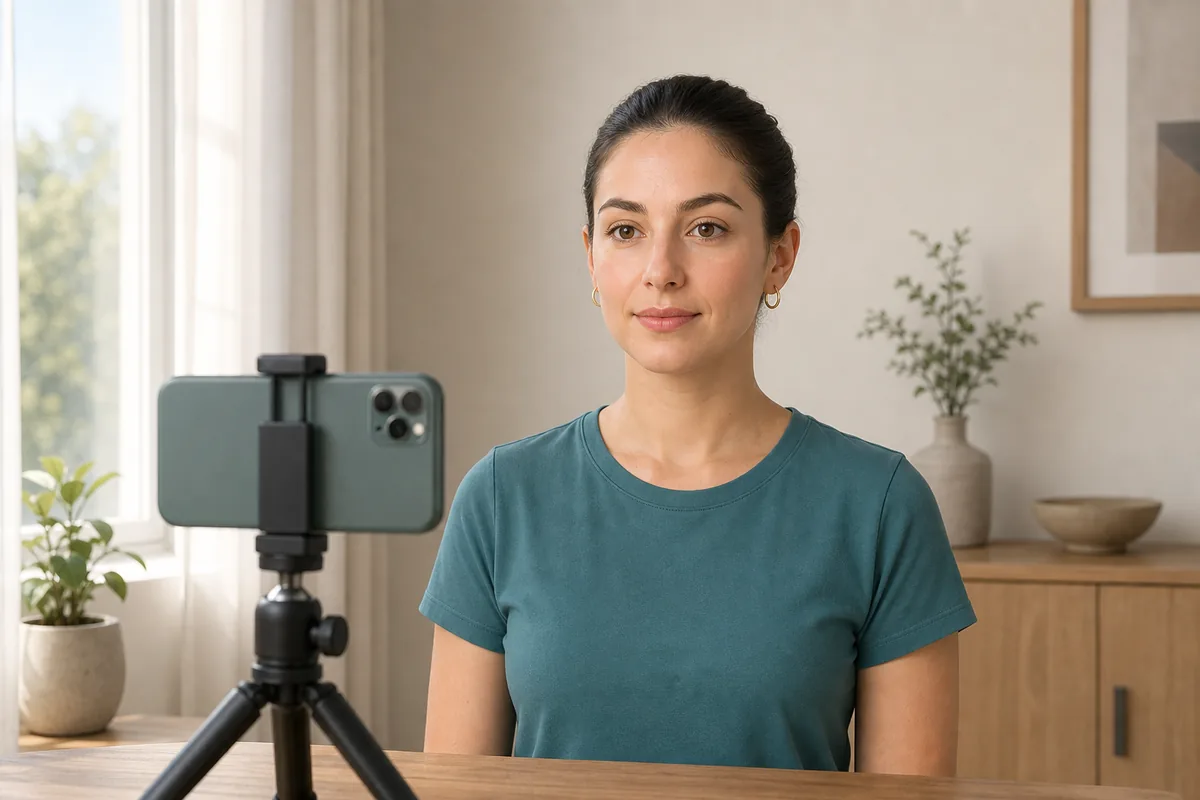
A clean photo gives both a person and an AI tool a better chance of reading the outline consistently. You do not need a studio setup. You need a natural distance, even light, a visible hairline and jaw, and a head position that does not introduce extra perspective.
Take one image with your face relaxed and another with the same setup if you want to compare stability. Do not choose the most flattering photo; choose the one that shows the structure most honestly.
| Instead of | Try | Why |
|---|---|---|
| Very close selfie | Phone at a natural arm's length or on a small tripod | Reduces wide-angle exaggeration |
| Hard side light | Soft light facing you | Keeps the jaw and cheek outline visible |
| Hair over the jaw | Hair pulled back from the face | Shows the actual outer contour |
| Tilted or smiling pose | Head upright and expression relaxed | Makes length and jaw shape easier to compare |
How to Use Your Result Without Overreading It
The best use of a face-shape result is to create a shortlist. If your face looks round, you might compare styles that add height or sharper lines. If it looks square, you might compare softer curves or layered framing. If it looks heart-shaped, you might test ways to balance the upper and lower face.
These are starting ideas, not rules. Hair texture, glasses fit, skin tone, personal taste, beard growth, makeup technique, and the actual proportions of your features matter just as much as the broad outline.
When two labels seem close, try both sets of suggestions in low-risk ways: virtual try-ons, temporary styling, or frames you can return. The useful question is not “which category wins?” but “which choice helps me feel more comfortable and intentional?”
Hair
Use the label to shortlist length, volume, and face-framing ideas, then adapt them to your texture and routine.
Glasses
Compare frame width, bridge fit, lens height, and line direction. Face shape can narrow choices, but comfort decides the final pair.
Makeup and grooming
Treat contour, blush, brow, and beard placement as experiments that change visual balance—not ways to hide a supposedly wrong face.
Photos
Use the outline to test camera distance and framing. A small change in angle can matter more than the category name.
Bottom Line
So, what face shape do I have? Start with a neutral front-facing view and compare face length, forehead width, cheekbone width, and jaw shape. If you prefer speed, use the AI face shape detector. If you prefer control, measure the same four signals yourself and compare the pattern.
No single photo has to settle the question forever. A useful result is one that helps you make a practical next choice—such as trying a hairstyle, choosing frames, or understanding why two photos look different—while leaving room for natural variation.
The short answer
Your face shape is the closest visual pattern created by your face length, forehead, cheekbones, jaw, and chin. Compare several signals, use a clear photo, and treat the label as a flexible styling guide.
What Face Shape Do I Have? FAQ
Further reading
Want a quick second opinion?
Upload a clear front-facing photo to compare your likely face shape, then return to this guide to understand the signals behind the result.