Face Shapes Explained: 7 Types and How to Tell Them Apart
A practical visual guide to oval, round, square, heart, diamond, oblong, and triangle face shapes—and the clues that separate similar outlines.
Written By
Clara Bennett
Beauty-tech columnist and lifestyle features writer
Clara writes about beauty, AI tools, privacy, and digital culture with a practical editorial focus.
Editorial Standard
Reviewed on 2026-08-22 for face-shape classification clarity, photo limits, and search intent coverage.
Face shape is a visual styling category, not a medical diagnosis or a fixed measure of attractiveness.
How This Guide Was Prepared
This guide organizes the face-shape categories readers most often see in beauty and styling references. It compares outline cues, explains where categories overlap, and separates a useful visual shorthand from claims that one face shape is universally better.

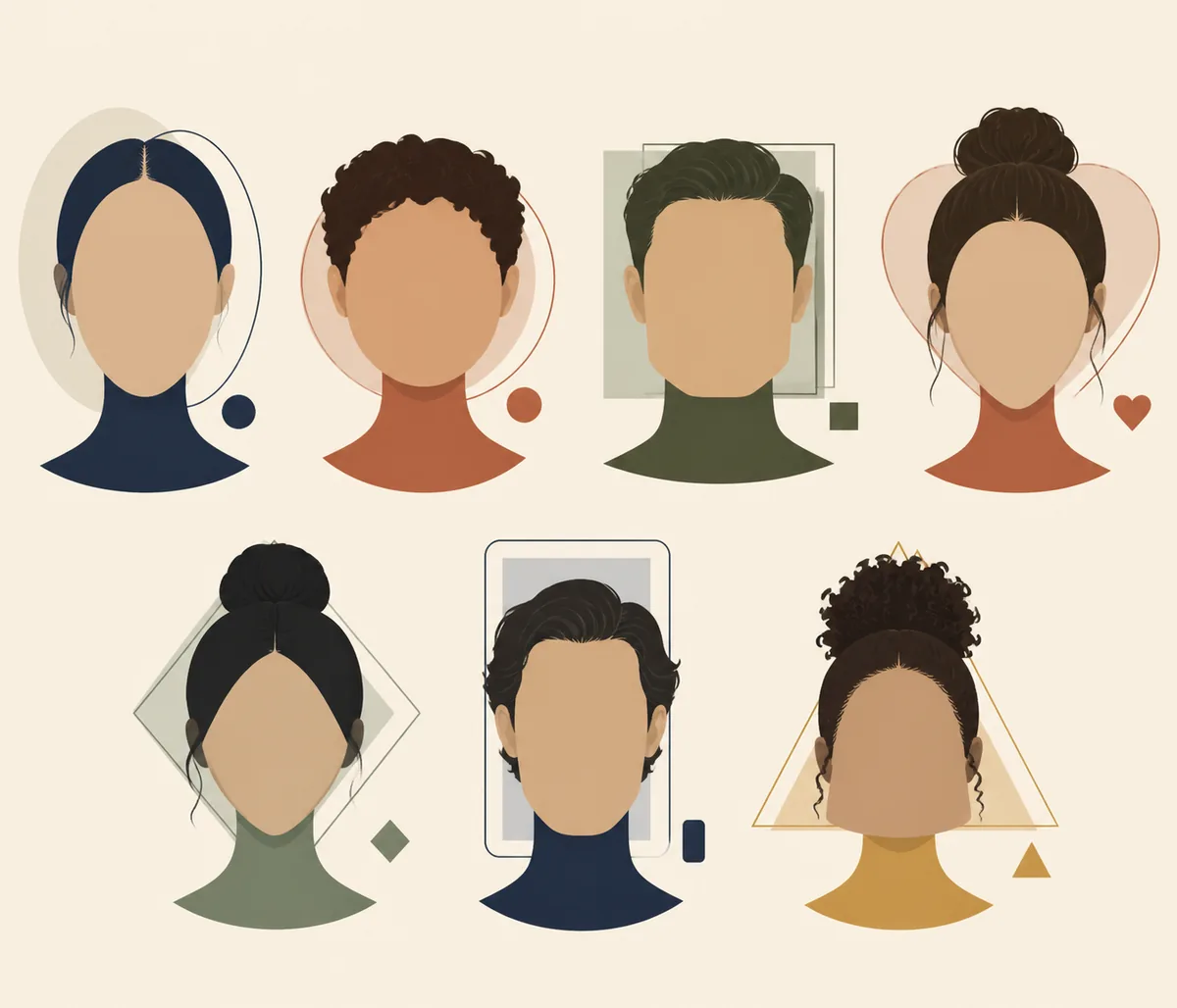
When people search for face shapes, they are usually trying to make a confusing visual question easier: does the face look longer than it is wide, where is it widest, and does the jaw look rounded, angular, or tapered? The common labels—oval, round, square, heart, diamond, oblong, and triangle—are shorthand for those relationships.
The important point is that a face shape is not a verdict. It is a flexible description of the outer contour. Many people sit between two categories, and the same face can look different when hair covers the temples, a phone camera is too close, or the head is tilted.
This guide explains the seven common face shapes, gives you a comparison table before the longer descriptions, and shows how to tell similar categories apart. If you want a quick estimate after reading, you can use the Face Shape Detector and then return here to understand what the result means.
What Do Face Shapes Actually Describe?
A face shape describes the visible outline of the face rather than the identity of a person or the attractiveness of a face. The useful signals are overall face length, the widest horizontal area, forehead width, cheekbone prominence, jaw angle, and chin shape. Looking at the relationship between these signals is more reliable than matching one feature to a celebrity photo.
The labels are not perfectly standardized. One styling guide may group triangle and pear-shaped outlines together, while another may treat oblong as a longer version of oval. That does not make the categories useless. It means you should use them as a shared vocabulary for comparing proportions and styling ideas, not as medical or scientific diagnoses.
Key Takeaway
The best face-shape result is the category that explains the overall outline and gives you useful next questions—not the label that sounds most flattering.
Quick Comparison of the Seven Common Face Shapes
Start with the table below as a map. It is not a scoring system, and a face does not need to match every row perfectly. Compare the broad pattern first, then read the individual descriptions and the similar-shape section.
If you are checking your own face, use a relaxed front-facing photo with your hair away from the cheeks and jaw. The goal is to see the outline clearly, not to create a flattering or dramatic portrait.
| Face shape | Typical outline cue | Common point of confusion |
|---|---|---|
| Oval | Longer than wide, with a gently rounded jaw | Can overlap with oblong or soft heart |
| Round | Length and width feel similar, with soft curves | Can be mistaken for soft square |
| Square | Similar length and width with a defined jaw | Jaw angle can soften in photos |
| Heart | Wider forehead or cheek area with a narrower chin | Can overlap with diamond |
| Diamond | Cheekbones are widest; forehead and jaw are narrower | Can look heart-shaped when the chin is pointed |
| Oblong | Clearly longer than wide, with fairly even side width | Can be mistaken for long oval |
| Triangle | Jaw is the widest area and the forehead is narrower | May be grouped with pear-shaped outlines |
- Look for the widest area before deciding which label fits.
- Compare the jaw and chin separately; a narrow chin does not automatically mean heart-shaped.
- Use length-to-width as context, not as a strict cutoff.
- If two categories remain close, keep both as working descriptions and test which one gives more useful styling ideas.
How to Read the Seven Face Shapes
The descriptions below focus on the outer pattern and the styling questions it often raises. They are written as tendencies, not rules. Natural faces are varied, and a person can have an oval outline with a strong square jaw or a heart-shaped outline with soft cheekbones.
Read each category together with the comparison table. A single cue—such as prominent cheekbones or a pointed chin—should not outweigh the whole outline.
Oval
The face is usually a little longer than wide, the cheekbones are gently prominent, and the jaw narrows without a sharp corner. Oval is often treated as versatile because the outline is relatively balanced.
Round
The face length and width feel close, while the cheeks and jaw have soft curves. The overall impression can change quickly with hair volume, frame angles, and camera distance.
Square
The forehead, cheek area, and jaw often create a structured outline with a defined lower face. The jaw may be angular, although soft tissue and expression can make it appear gentler.
Heart
The upper face is broader and the chin narrows, sometimes with a visible point. The transition from cheekbone to jaw matters more than the forehead alone.
Diamond
The cheekbones are the strongest width, while the forehead and jaw are narrower. The shape often looks more angular or sculpted from the front.
Oblong
The face is noticeably longer than wide, with the sides staying relatively even from cheek to jaw. It differs from oval mainly through length and a less tapered outline.
Triangle
The lower face or jaw is the widest area and the forehead is narrower. Some guides call this pear-shaped, so the name matters less than the widening pattern.
How to Tell Similar Face Shapes Apart
Most confusion happens between categories that share one obvious feature. A round face and a soft square face may both look wide, while heart and diamond shapes may both have a narrow chin. The solution is to compare at least three signals: length, widest area, and jaw direction.
Use these pairings as a practical check rather than a rigid quiz. If the result changes between two labels, the overlap may be real rather than a failure to measure correctly.
Oval vs oblong
Both are longer than wide. Oval usually tapers more gently toward the jaw and feels more balanced in length, while oblong stays visibly elongated with more even side width.
Round vs soft square
Both can have similar length and width. Round has a continuous curved outline; square keeps more structure at the temples or jaw even when the corners are not sharp.
Heart vs diamond
Heart shapes are typically broadest higher on the face and narrow toward the chin. Diamond shapes are broadest at the cheekbones, with both the forehead and jaw set in more noticeably.
Triangle vs square
Both can emphasize the lower face. Triangle narrows toward the forehead, while square keeps a more even width and a stronger sense of parallel sides.
Oval vs heart
A soft heart shape may look oval when hair hides the temples. Check whether the forehead or cheek area is distinctly wider than the jaw before choosing the label.
Mixed outlines
Faces often combine cues. Use a primary label for convenience, then keep a second description when it changes the styling advice in a useful way.
Why Photos Can Change the Face-Shape Result
A mirror, a phone selfie, and a portrait taken from several feet away can show noticeably different outlines. A close front camera can make the center of the face look wider, while a tilted head changes the apparent length and jaw angle. Hair, glasses, shadows, and a smile can hide the exact contour you are trying to compare.
This is why a reliable check uses a neutral expression, even light, a natural camera distance, and a head position that is close to straight on. Repeatable setup matters more than chasing a single perfect measurement. A measurement-based reference such as the Omni Calculator face-shape guide can help you compare the same landmarks consistently.
An AI tool can speed up the comparison, but it still works from the photo it receives. Treat the result as a closest-match estimate. If two categories are close, that may reflect the limits of the image or the fact that your outline genuinely sits between common labels.
Use the category as a guide, not a judgment
A face-shape label cannot measure your worth, personality, health, or complete appearance. It is simply a convenient way to talk about visible contour and styling choices.
What improves a visual check
- Pull hair back from the temples, cheeks, and jaw when possible.
- Use soft, even light rather than a strong side shadow.
- Keep the camera at a natural distance and avoid extreme wide-angle selfies.
- Compare more than one photo taken with the same setup.
- Keep two likely categories when the outline does not fit one label cleanly.
For a measurement-based reference, see the Omni Calculator face-shape guide .
How to Use a Face-Shape Label in Real Life
A face shape is most useful when it helps you ask a better styling question. You might compare whether you prefer more width or more height in a haircut, softer or sharper frame lines in glasses, or a different camera distance in profile photos. The label narrows the starting options; it should not remove your personal taste.
Use the category as a shortlist, then check the details that matter more to the final decision: hair texture, frame comfort, brow and eye placement, beard growth, makeup technique, skin tone, and how the choice looks in motion rather than one still image.
If you upload a photo to an online analyzer, read the service privacy information first and avoid uploading another person's face without permission. Face-shape classification is not identity verification, but a face photo is still personal data that deserves careful handling.
- Use face shape to compare options, not to rank yourself against other people.
- Test small styling changes before making an expensive or irreversible decision.
- Treat hair, glasses, makeup, and camera angle as part of the final visual result.
- Use a service that explains how uploaded photos are handled.
- Stop testing if the process becomes upsetting or overly repetitive.
For a faster photo-based estimate, try the Face Shape Detector.
For a general consumer overview of face-shape categories, read the Cleveland Clinic face-shape guide .
A Simple Workflow for Comparing Your Face Shape
You do not need special equipment to compare face shapes. A mirror can help you see the broad outline, a soft tape or a marked photo can make subtle differences easier to check, and a straight-on portrait gives you a record you can revisit without relying on memory.
The most useful workflow is repeatable: clear the outline, compare the main widths and length, then look at the jaw and chin. Only after that should you use a category label or an AI estimate.
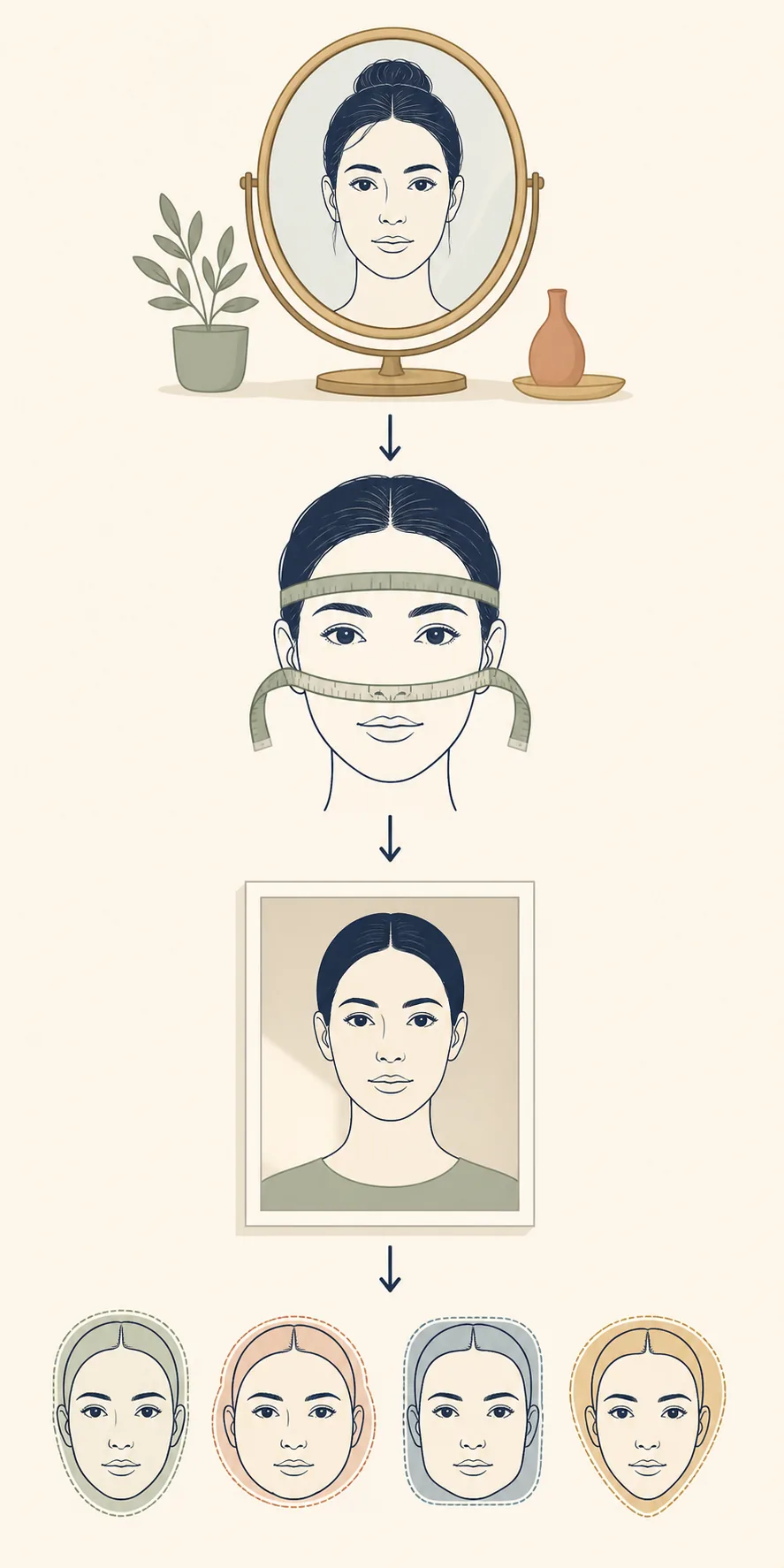
| Step | What to check | Why it helps |
|---|---|---|
| 1. Clear the outline | Pull hair away from the temples and jaw | Prevents styling from hiding the real contour |
| 2. Compare length and width | Notice whether the face is clearly longer than wide | Separates many oval/oblong faces from round/square faces |
| 3. Find the widest area | Compare forehead, cheekbones, and jaw | Helps distinguish heart, diamond, and triangle patterns |
| 4. Read the jaw | Look for a rounded, tapered, or defined lower edge | Adds context when two categories share the same width pattern |
What the Result Can Help You Decide
Once you have a working category, use it to compare choices rather than to enforce a rule. The same face shape can support many looks, and the best option depends on the feature or feeling you want to emphasize.
If you want more specific advice, combine the broad outline with a closer look at facial proportions and symmetry. Those are separate questions, not hidden parts of one face-shape label.
Hair
Compare where you want volume, height, softness, or framing. Hair texture and maintenance still matter more than a category rule.
Glasses
Use shape as a shortlist, then check frame width, bridge fit, lens height, and comfort. A good fit should work in motion, not only from the front.
Makeup and grooming
Treat contour, blush, brows, beard lines, and parting direction as experiments that change visual balance rather than fixes for a wrong face.
Photos
Use the outline to compare camera distance and framing. Lens perspective can change the result more than a small difference between two labels.
Summary: Use Face Shapes as a Flexible Vocabulary
The seven common face shapes—oval, round, square, heart, diamond, oblong, and triangle—make it easier to describe broad facial contours. The most reliable comparison looks at length, width, the widest area, and the jaw together instead of searching for one magic ratio.
If your result falls between categories, keep both descriptions. Use the label to choose better questions about hair, glasses, makeup, grooming, and photos, then let comfort and personal preference make the final decision.
The short answer
There are seven commonly used face-shape categories, but real faces overlap. Compare the whole outline, use a clear photo, and treat the result as a practical styling guide rather than a permanent verdict.
Face Shapes FAQ
Further Reading
Want a Quick Second Opinion?
Upload a clear front-facing photo to compare your likely face shape, then return to this guide to understand the cues behind the result.