What Does a Beauty Score Mean? A Clear Guide to AI Ratings
Learn what a beauty score may measure, why the same face can receive different results, and how to use an AI rating as photo feedback instead of a verdict.
Written by
FaceAnalysis.org Editorial Team
AI face analysis and visual measurement editors
We explain photo-based face analysis in plain language, with practical checks for measurement limits, privacy, and responsible interpretation.
Editorial review
Reviewed for search intent, score interpretation, photo-quality limits, and consistency with the FaceAnalysis.org face rating tool.
A beauty score describes the image and scoring model used by a tool. It does not define a person's worth, identity, or complete attractiveness.
How this guide was prepared
This guide compares the recurring signals described by current AI beauty-score tools with the photo and privacy limits that affect any image-based reading. The aim is a practical interpretation framework, not a claim that one number is universal.
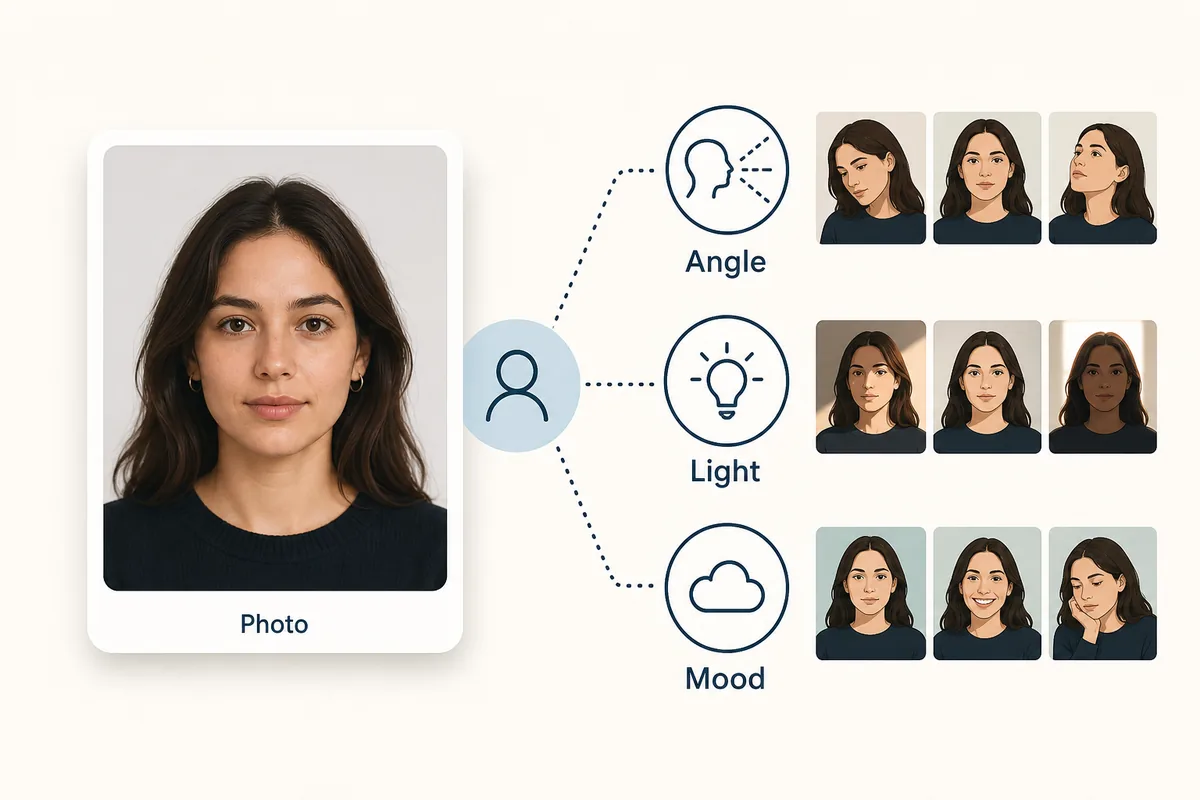
If you searched for what does a beauty score mean, the short answer is this: it is a model-based summary of visible patterns in one image. A tool may combine symmetry, facial proportions, feature balance, skin appearance in the photo, expression, and image quality into a number or label. That number is useful only when you understand the signals and limits behind it.
A beauty score is not a universal measurement shared by every app. One service may use a 1-to-10 scale, another 0 to 100, and a third a percentile or descriptive band. This guide explains what an AI rating may reflect, why photos produce different results, and how to keep a temporary reading from becoming a judgment about your identity or worth.
What a Beauty Score Means in Plain Language
A beauty score is an output from a model that compares visible face patterns with the patterns represented in its data or rules. It may detect a face, locate landmarks around the eyes, nose, lips, cheeks, jaw, and outline, then calculate several relationships. It may also assess whether the photograph is clear enough for those landmarks to be read.
That makes the result a measurement of the image-model interaction, not a complete measurement of a person. The same face can score differently in a close selfie, a dark room, or a photo with a tense expression. Ask what visible cues the tool read and whether they stay stable when the photo setup is controlled.
The useful rule
Read a beauty score as feedback about one photo under one model. Keep the number in context, look for the explanation, and avoid comparing unrelated scales.
What an AI Beauty Score May Reflect
Tools use different formulas, but the same signal families appear repeatedly. Understanding them helps you decide whether a result is actionable, uncertain, or too dependent on the photo to carry much meaning.
| Signal | What it may reflect | Why it is limited |
|---|---|---|
| Facial symmetry | How evenly features line up left to right | Tilt, expression, shadows, and natural asymmetry change it |
| Proportions | Relative spacing among eyes, nose, lips, chin, and outline | Lens distance can stretch or compress relationships |
| Feature balance | How feature sizes and positions work together | The model's data and rubric may favor one style |
| Clarity and expression | Whether detail, mood, crop, and framing are readable | Light, focus, makeup, and pose change visible evidence |
- Read the component breakdown before reacting to the combined score.
- Compare photos within the same tool; different services do not share one scale.
- If image quality is flagged, fix the input before drawing a conclusion.
What a Beauty Score Cannot Tell You
A model sees only what is present in the supplied image and what its scoring rules represent. It cannot observe your voice, movement, kindness, humor, relationships, cultural context, or how your appearance changes across ordinary moments. It also cannot decide whether an aesthetic standard is fair or meaningful for you.
It cannot measure your whole appearance
A still image removes movement, voice, expression range, posture, and everyday context.
It cannot create a universal scale
Ranges, labels, training data, and weights differ between models.
It cannot predict social outcomes
A score is not evidence about dating, work, respect, or personal value.
It cannot replace professional care
Health concerns or distress need an appropriate professional resource.
Why the Same Face Can Receive Different Scores
The input can change before the face itself changes. A close phone camera may enlarge the center of the face, side light may deepen one shadow, and a smile may alter the cheeks and jaw. A crop can remove context that helped the model locate landmarks.
Different services also use different reference sets, labels, thresholds, and weights. Compare results only within the same service and a controlled setup, look for repeated patterns across two or three similar photos, and read the image-quality notes first.
Camera distance
Close wide-angle selfies can enlarge central features and change apparent proportions.
Light and shadow
Uneven light can hide one side or exaggerate normal asymmetry.
Expression and pose
A smile, jaw tension, head tilt, or three-quarter view changes landmarks.
Model differences
Different scales and assumptions mean scores should not be averaged.
How to Read a Beauty Score Without Overreading It
Start with the photo, then the components, and only then the combined number. Check distance, focus, light, pose, crop, and expression. If the explanation is vague, lower your confidence in the score rather than filling in the missing logic yourself. Choose one narrow next step, such as improving the photo or exploring a styling idea; you do not need to chase a perfect number.
Keep the conclusion proportional to the evidence
A score from one image is weak evidence about a whole person. It becomes more useful when the same tool, similar framing, and a clear component explanation point to a stable photo pattern.
A practical interpretation sequence
- Check distance, focus, light, pose, crop, and expression.
- Separate photo quality from structural observations in the component notes.
- Compare the same service with similar framing and only a few images.
- Stop when the result becomes repetitive, upsetting, or disconnected from a useful question.
For a broader explanation of how image-based face analysis should be interpreted, read the FaceAnalysis.org face analysis guide before treating a score as more certain than the photo allows.
A Practical Photo Checklist for Comparing Results
Use a repeatable photo setup when comparing a beauty score: natural distance, soft light, upright head, relaxed expression, and no filter. Before uploading any face photo, read the privacy policy and check storage, retention, public results, training use, and deletion options. Do not upload another person's face without permission.
- Use a natural camera distance instead of an extreme close-up.
- Face soft, even light and keep both sides visible.
- Keep the head upright and expression relaxed; avoid filters.
- Stop if repeated scoring starts to affect your mood.
Before using an upload feature, read our Privacy Policy.
For an example of how photo conditions can change a reading, compare the photo variables illustration below with the checklist before running another comparison.
Photo Variables That Can Change a Beauty Score
Two uploads can produce different feedback even when the person is the same. Uneven light, a close camera, and a changed angle alter the visible evidence. Change one variable at a time, keep the same service, and compare the written explanation as well as the number.
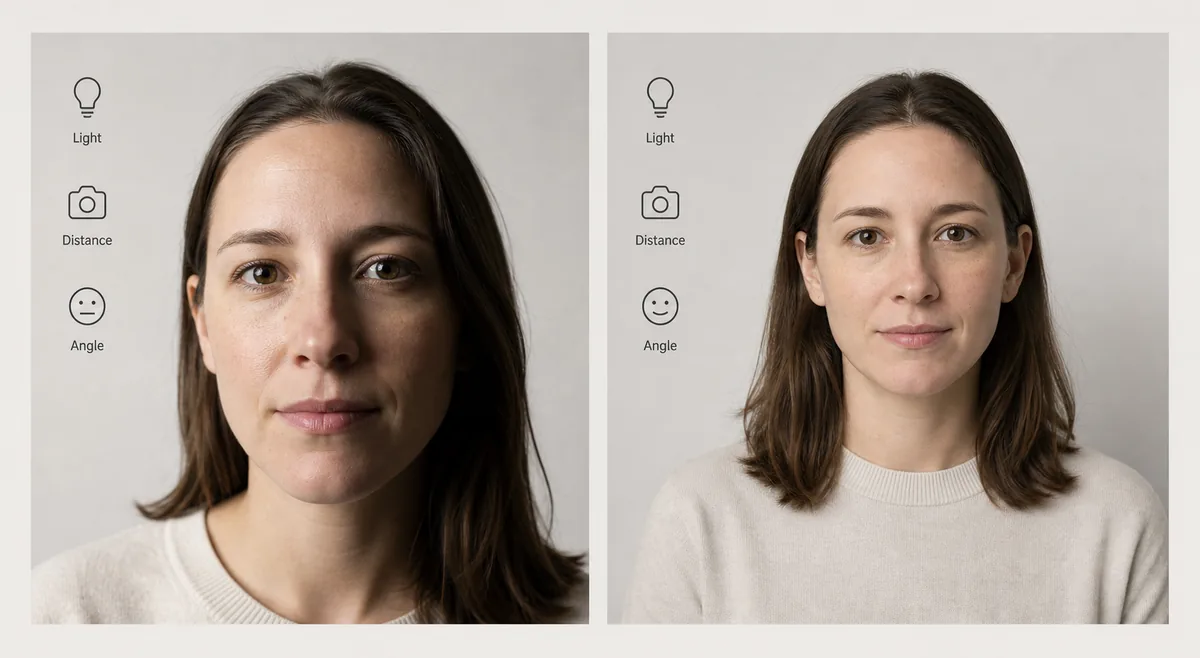
| Variable | Better comparison | Why it matters |
|---|---|---|
| Lighting | Soft light from the front | Keeps feature edges consistent |
| Distance | Arm's length or farther | Reduces wide-angle exaggeration |
| Pose | Upright, front-facing head | Makes comparisons steadier |
| Expression | Neutral first, smile separately | Separates expression effects |
| Editing | No filter or smoothing | Avoids an untracked variable |
How to Use the Result as Helpful Feedback
A beauty score is useful when it answers a small question, such as whether a camera setup distorts the center of the face or whether light hides one side. Write down the conditions and one next experiment. If a result is upsetting, close the page and take a break rather than searching for another number; the tool stops being useful when it drives compulsive comparison.
Photo setup
Improve distance, light, focus, or framing when image quality is weak.
Specific features
Use symmetry or proportion feedback for a narrower question.
Styling ideas
Treat the score as a shortlist, then use comfort and taste to decide.
Personal boundaries
Limit repeats and stop if the number controls your mood.
Bottom Line
So, what does a beauty score mean? A model found visible patterns in a photo and combined them into a number, label, or band. It may reflect symmetry, proportions, feature balance, clarity, expression, and framing, but the weights depend on the service. Use it as a limited photo check, protect your image, and remember that no single score can summarize a whole person.
The short answer
A beauty score is model-based feedback about one image, not a universal verdict. Compare like with like, look for the explanation, and choose practical next steps instead of chasing a perfect number.
Beauty Score FAQ
Further reading
Want a more specific result?
Use the face rating tool to inspect a clear photo, then return to this guide to understand what the score and component notes can mean.