비대칭 얼굴을 고치고 싶을 때: 원인, 사진 점검, 안전한 선택지
자연스러운 좌우 차이, 셀카 왜곡, 습관, 턱 요인, AI 대칭 결과, 전문가 상담이 필요한 신호를 구분하는 안내입니다.
작성
FaceAnalysis.org Editorial Team
AI 얼굴 분석 편집팀
사진 품질, 얼굴 비율, AI 얼굴 분석을 안전하게 읽는 방법을 검토해 한 장의 셀카를 진단처럼 받아들이지 않도록 돕습니다.
검토 기준
Similarweb 키워드, 현재 검색 결과, 턱 통증과 갑작스러운 얼굴 약화 관련 의료 자료를 함께 확인했습니다.
사진 기반 비교에 도움이 될 때만 FaceAnalysis.org 도구를 링크합니다.
이 가이드 작성 방식
Similarweb에서 how to fix asymmetrical face, facial asymmetry 및 카메라 관련 질문 수요가 확인되었습니다. 사진, 정상 변이, 선택지, 진료 신호를 나누어 설명합니다.
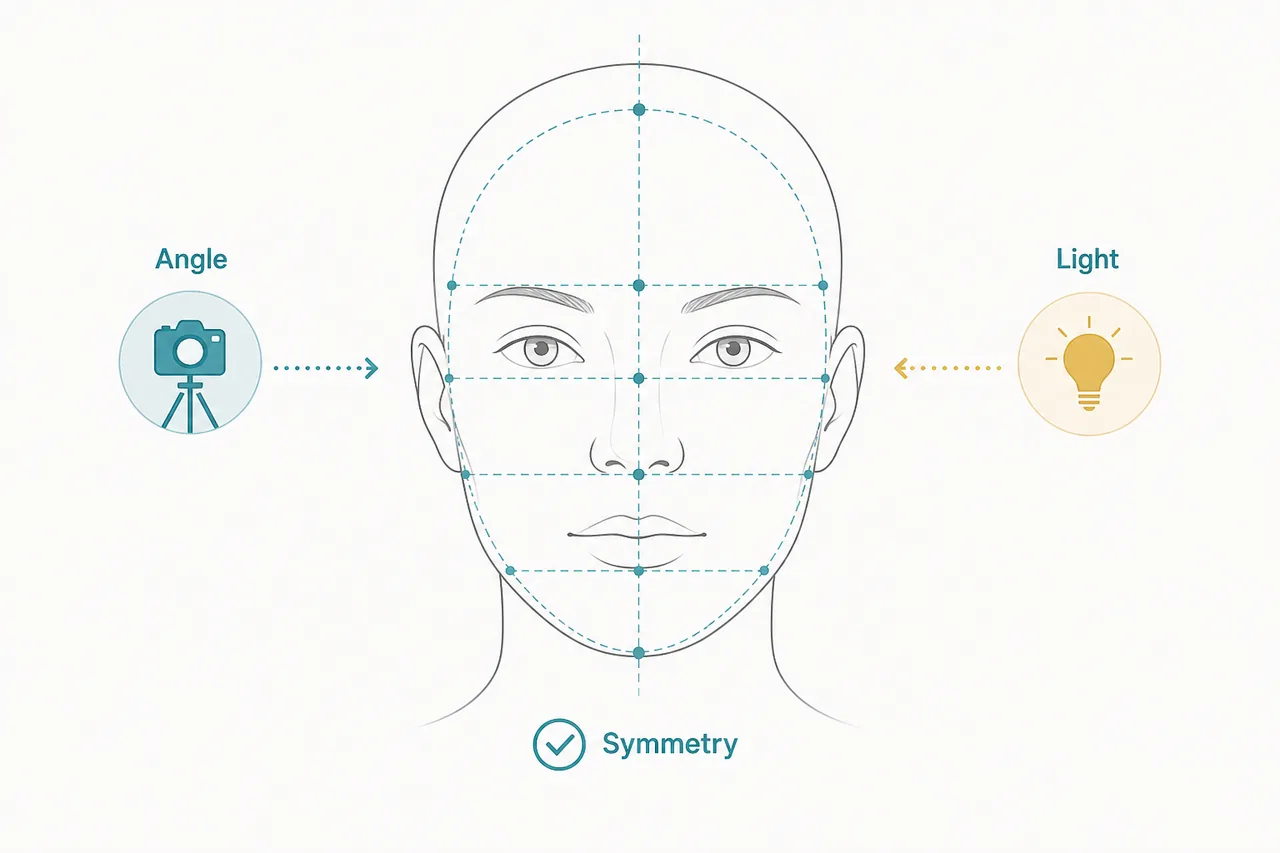
자연스러운 좌우 차이, 셀카 왜곡, 습관, 턱 요인, AI 대칭 결과, 전문가 상담이 필요한 신호를 구분하는 안내입니다.
Similarweb에서 how to fix asymmetrical face, facial asymmetry 및 카메라 관련 질문 수요가 확인되었습니다. 사진, 정상 변이, 선택지, 진료 신호를 나누어 설명합니다.
비대칭 얼굴이 걱정될 때 사진 조건, 흔한 원인, 도움이 될 수 있는 선택지, 피해야 할 행동, 진료가 필요한 신호를 정리합니다.
What an Asymmetrical Face Usually Means
An asymmetrical face means the two sides do not line up exactly. That is normal. Eyes can sit at slightly different heights, one cheek can look fuller, the mouth can pull more to one side when smiling, and the jawline can look stronger from one angle than another.
The useful question is not whether your face is perfectly mirrored. It is whether the difference is stable, photo-created, habit-related, or a sign that needs professional attention. A face symmetry test can help you compare a clear front photo, but it cannot diagnose a medical, dental, or nerve condition.
Quick answer
Most mild facial asymmetry is normal. Start with photo setup and observation before assuming your face needs to be fixed.
Common Causes and What They Suggest
Facial asymmetry can come from normal growth, genetics, expression habits, dental bite, jaw tension, past injury, swelling, or a temporary photo angle. Medical reviews also separate causes into congenital and acquired groups, which is why a sudden change should be treated differently from a lifelong small difference.
Use the table as a sorting tool, not a diagnosis. If a change is sudden, painful, or affects speech, eye closure, swallowing, or facial movement, skip online self-analysis and seek medical care.
| Signal | Likely interpretation | Best next step |
|---|---|---|
| Looks stronger in selfies | Camera distance, lens distortion, light, or head turn | Retake a front-facing photo at eye level |
| Has always been mild | Normal facial variation or growth pattern | Use symmetry results as context, not a flaw label |
| Jaw shifts or clicks | Possible bite, clenching, or temporomandibular joint factor | Ask a dentist or clinician if pain or function is affected |
| Sudden droop or weakness | Possible nerve or urgent medical issue | Get medical advice promptly |
| Recent swelling or pain | Inflammation, injury, dental, sinus, or skin-related cause | Look for the source before judging symmetry |
- Compare photos taken on different days before drawing conclusions.
- Do not use a mirrored selfie as your only evidence.
- Separate appearance curiosity from symptoms such as pain, numbness, or weakness.
- Treat online exercises and devices cautiously if they promise structural changes.
Check the Photo Before You Try to Fix Anything
Many people search for how to fix an asymmetrical face after seeing one harsh selfie. A phone held too close can enlarge the nose and center of the face, side light can deepen one cheek shadow, and a slight head turn can make one jaw angle look larger.
Before changing your routine, create a cleaner comparison photo. This makes your symmetry result more stable and prevents a camera problem from becoming a self-image problem.
Set the camera at eye level
Use a tripod, shelf, or timer so the lens is not below your chin or above your forehead.
Step back from the lens
Avoid extreme close-ups; use a normal portrait distance and crop later if needed.
Use soft front light
Face a window or even light source so one side is not hidden by shadow.
Take neutral and smiling versions
A neutral photo checks structure; a smiling photo shows expression-related asymmetry.
What Can Actually Help an Asymmetrical Face?
The safest fixes are the ones that target the cause. If the issue is photo distortion, change the setup. If it is posture, sleep pressure, clenching, or expression habits, the improvement is usually gradual and functional rather than a dramatic reshaping. If the issue involves bite, jaw pain, injury, or nerve weakness, professional evaluation matters more than online hacks.
Be cautious with claims that a face can be permanently reshaped by a few viral exercises. Muscle tone, posture, swelling, and expression can change appearance, but bone structure, bite relationships, and nerve function require qualified care when they are the real cause.
Photo-based asymmetry
Improve lighting, lens distance, head position, and crop before judging the face.
Habit-related asymmetry
Watch repeated chewing side, clenching, posture, and sleep pressure without expecting instant changes.
Dental or jaw factors
Consider dental, orthodontic, or clinical advice when bite, pain, clicking, or chewing function is involved.
Sudden facial change
Do not self-treat sudden drooping, weakness, numbness, or trouble closing one eye.
When Facial Asymmetry Needs Professional Care
Aesthetic curiosity is different from a symptom. Mild lifelong asymmetry is common, but sudden facial drooping, new weakness, trouble smiling, difficulty closing one eye, slurred speech, facial numbness, severe headache, injury, or painful swelling should not be handled as a beauty-score question.
Bell's palsy and other causes of facial weakness can appear suddenly, and jaw disorders can involve pain or difficulty moving the jaw. This guide cannot tell you which condition is present. It can only help you decide when the question has moved beyond photo feedback.
Safety first
If asymmetry appears suddenly or comes with weakness, numbness, pain, speech change, eye-closing trouble, or injury, seek medical care instead of relying on an online face analyzer.
Signs that deserve more than self-analysis
- One side of the mouth, eye, or eyebrow suddenly droops.
- You cannot close one eye normally or smiling feels uneven in a new way.
- Jaw pain, locking, clicking, or chewing difficulty is persistent.
- Swelling, dental pain, sinus pain, or injury appeared before the asymmetry.
- The concern is causing obsessive checking or distress.
For medical context on sudden facial weakness, see Cleveland Clinic's Bell's palsy overview and contact a qualified clinician for personal symptoms.
How to Use an AI Symmetry Tool Without Overreading It
An AI symmetry tool is best used as a photo-feedback aid. It can point out visible left-right balance signals, but it does not know your bite, jaw joint, medical history, muscle function, or how your face moves in real life.
Use the result to ask better questions: Was the photo straight? Did the mouth look uneven only while smiling? Is the jaw difference stable across images? Are there symptoms that belong with a professional? That approach keeps the tool useful and low-stakes.
- Use one clear front photo before comparing scores.
- Avoid uploading sensitive IDs, workplace photos, or someone else's face.
- Read privacy terms before using any upload-based tool.
- Stop testing if the score makes you keep checking for reassurance.
For a structured photo check, try our Face Symmetry Test.
For jaw-pain context, the U.S. NIDCR explains temporomandibular disorders and jaw pain as a separate health topic from appearance scoring.
A Safe Checklist Before Acting on the Result
Use this checklist before you decide that your asymmetrical face needs fixing. It keeps photo variables, normal variation, habits, and professional care in separate boxes.
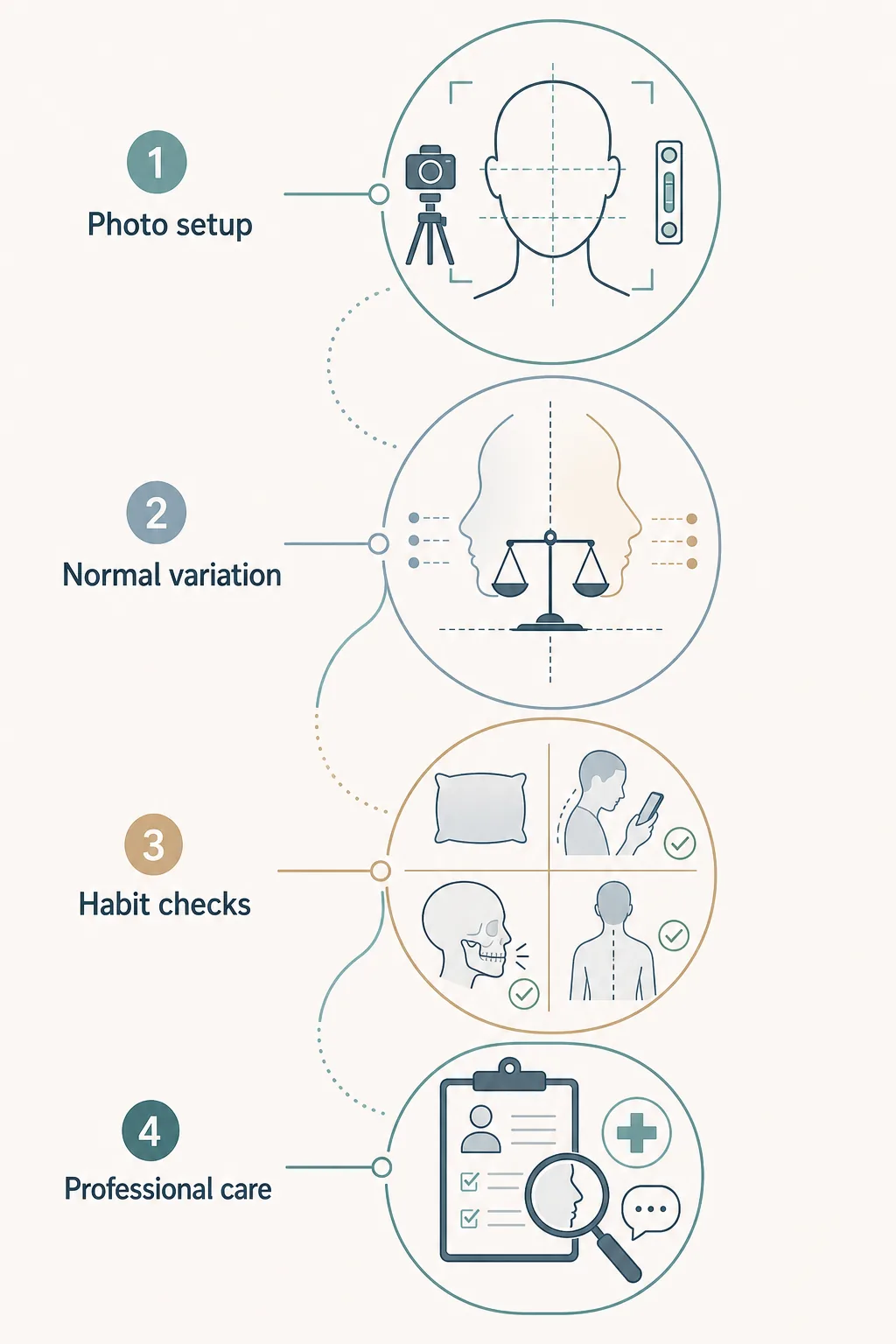
| Question | If yes | If no |
|---|---|---|
| Does it only show in one selfie? | Retake the photo before judging | Compare several clear photos |
| Has it been present for years? | Treat it as normal variation unless symptoms changed | Look for recent triggers |
| Is there pain, droop, weakness, or swelling? | Seek professional advice | Use low-stakes photo feedback |
| Are you repeatedly checking? | Pause testing and reduce appearance comparison | Use one clean result as context |
What Not to Do When You Notice Facial Asymmetry
Do not chase a perfect mirror image. Perfect symmetry is not realistic, and a highly mirrored face can look unnatural. Do not start aggressive exercises, devices, or cosmetic decisions because one app or one photo made a side look different.
Also avoid diagnosing yourself from social media examples. Many posts mix photo distortion, editing, makeup, orthodontic issues, nerve conditions, and cosmetic procedures as if they were the same problem. They are not.
Do not trust one image
A single close selfie is weak evidence for structural asymmetry.
Do not ignore symptoms
New weakness, pain, swelling, or movement changes deserve care.
Do not buy miracle fixes
Treat claims about fast permanent reshaping with skepticism.
Do not overtest
Repeated scoring can make normal variation feel more severe.
Bottom Line
If you want to know how to fix an asymmetrical face, start with the least risky explanation: photo setup, lighting, camera distance, head position, and expression. Then look at whether the difference is lifelong, habit-related, dental or jaw-related, or new and symptomatic.
Use AI face symmetry results as context, not diagnosis. The practical goal is not a perfectly mirrored face; it is a clearer understanding of what you are seeing and which next step is actually appropriate.
Practical conclusion
Retake the photo, compare calmly, use symmetry tools as low-stakes feedback, and seek professional care for sudden or symptomatic changes.